Thursday, January 17, 2019

Civil Disobedience- Feb 2019

Civil Disobedience

Be the Change

APPRENTICE

What does it take to make big societal changes come about? For example, if you wanted to institute a new rule saying that teachers in public schools would not be allowed to assign homework, what would you have to do? Would this change happen easily? Would it take a long time? What steps might you take in order to get a new rule like this in place? Can an individual make a difference?
Throughout history, there have been times when people felt so deeply about a political or social issue, they resisted the status quo—the current state of affairs—in some manner. This week, we will be examining different ways people have behaved in an effort to bring about big societal changes.

Be the change you wish to see in the world. --Mohandas Gandhi

Read/Study


1. Watch this background video presentation made by Emily Halley:) 

2. Read Story of the World vol 4 pages 433-436.
2. Read Gandhi the Man by Eknath Easwaran 

3. Develop a definition as you read for the terms: satyagraha, and ahimsa.  From the Dictionary of Cultural Literacy define and write Gandhi, Mahatma and civil disobedience. Write them on your notecards.

4. Optional: watch Gandhi (1982) PG Available to rent on Amazon
(This film won 8 Academy Awards including Best Picture, Best Director and Best Actor) 

Know/Understand
Choose 1 of the following inspirements:

• Gandhi's life in many ways mirrored Jesus Christ's. Can you find some accounts from Christ's ministry that align with Gandhi's beliefs? What could be a synonym of satyagraha that is used in the Bible?

• Compare and contrast the goals and methods of Gandhi and Stalin. Write a page or two on this topic. Share this with me and your writing mentor.

• A paradox is a statement or proposition that, despite sound (or apparently sound) reasoning from acceptable premises, leads to a conclusion that seems senseless, logically unacceptable, or self-contradictory.
Do you see any paradox in Gandhi's beliefs regarding fighting your enemies through making them your friends? Write a page or two on this topic. Share this with me and your writing mentor.


Become/Serve

• After reading about Gandhi and his teachings about satyagraha, think of some ways you could try his approach in your own life. Try to be conscious of your own feelings towards others as you go about your week. When a disagreement arises, instead of getting upset, try to remove your personal feelings and see the conflict for what it is. Can you solve the problem with love and kindness? Write about your experience.

• Gandhi had some major weaknesses to overcome in order to follow his path. Why do we have weaknesses? Do you feel like there is anything standing in your way right now? Do you think you can overcome it? How? Set a goal to work on something this week that has been a weakness in the past. Journal about your experience.


masters

“One has a moral responsibility to disobey unjust laws.” –Martin Luther King, Jr.


Background:

Martin Luther King, Jr. was the main leader in the African American civil rights movement. I know we are jumping ahead of our history timeline a bit, but MLK was greatly influenced by Gandhi and his methods, so I think it is very fitting to study them alongside each other. The last time we discussed racial issues was when we studied the civil war. A lot happened to the blacks in our country between the Civil War and MLK, so if everyone can do a good job presenting their timeline events below, we should be able to create a clear picture in class of what led up to the civil rights act. 
Read/Study

1. Read Letter from Birmingham Jail by Martin Luther King, Jr. --Written in April 1963
   Martin Luther King, Jr.'s Letter from Birmingham Jail delivered an important statement on civil rights and civil disobedience. The 1963 racial crisis in Birmingham, Alabama was a critical turning point in the struggle for African American civil rights. Although King's letter was not published until after the crisis was resolved, it is widely regarded as the most important written document of the modern civil rights movement and a classic text on civil disobedience.  
As you read, underline the main idea in each paragraph or summarize the main idea of the paragraph in the margin. Please bring this to class for discussion.

2. We are going to make a class timeline of African American history from the end of the Civil War until 1964. Please choose one segment of years and present the events of those years to the class. Click here for the timeline of events, find your year segment and research the events listed there. Please sign up here.

1865-1866 - 
1867-1868
1870 - 
1877-1879 - 
1881-1882 - 
1896 - 
1905-1909 - 
1920's - 
1947-1948 - 
1954-1955 - 
1957-1960 - 
1962-1963 - 
1964 -  


3. Watch one or more of the following movies

                  • The Butler (PG-13)- As Cecil Gaines serves eight presidents during his tenure as a butler at the White House, the civil rights movement, Vietnam, and other major events affect this man's life, family, and American society.
                
                  • Remember the Titans (PG) - The true story of a newly appointed African-American coach and his high school team on their first season as a racially integrated unit.
                
                  • Selma (PG-13)- A chronicle of Martin Luther King's campaign to secure equal voting rights via an epic march from Selma to Montgomery, Alabama in 1965.
                 
                   • 42 (PG-13) - The story of Jackie Robinson from his signing with the Brooklyn Dodgers organization in 1945 to his historic 1947 rookie season when he broke the color barrier in Major League Baseball.

                   • The Help (PG-13) - An aspiring author during the civil rights movement of the 1960s decides to write a book detailing the African-American maids' point of view on the white families for which they work, and the hardships they go through on a daily basis.
Written in April 1963, Martin Luther King, Jr.'s “Letter from Birmingham Jail” delivered an important statement on civil rights and civil disobedience. The 1963 racial crisis in Birmingham, Alabama, was a critical turning point in the struggle for African American civil rights. Although King's letter was not published until after the Birmingham crisis was resolved, it is widely regarded as the most important written document of the modern civil rights movement and a classic text on civil disobedience. - See more at: http://www.mlkonline.net/jail.html#sthash.FYKYNt6S.dpuf


Written in April 1963, Martin Luther King, Jr.'s “Letter from Birmingham Jail” delivered an important statement on civil rights and civil disobedience. The 1963 racial crisis in Birmingham, Alabama, was a critical turning point in the struggle for African American civil rights. Although King's letter was not published until after the Birmingham crisis was resolved, it is widely regarded as the most important written document of the modern civil rights movement and a classic text on civil disobedience. - See more at: http://www.mlkonline.net/jail.html#sthash.FYKYNt6S.dpuf


Written in April 1963, Martin Luther King, Jr.'s “Letter from Birmingham Jail” delivered an important statement on civil rights and civil disobedience. The 1963 racial crisis in Birmingham, Alabama, was a critical turning point in the struggle for African American civil rights. Although King's letter was not published until after the Birmingham crisis was resolved, it is widely regarded as the most important written document of the modern civil rights movement and a classic text on civil disobedience. - See more at: http://www.mlkonline.net/jail.html#sthash.FYKYNt6S.dpuf
Know/Understand

• Write one or two pages on how Martin Luther King, Jr. and Gandhi showed perseverance. Also, have you had to use perseverance in your life?  

• There were other minority groups struggling for equality throughout the world during the years of 1850-1945, such as women, Jews, Irish, Native Americans, and black South Africans. Study one of these groups and create a presentation for the class that summarizes their experience. 

• Write a poem or create a piece of artwork that expresses either perseverance or the feelings of being treated badly by an oppressive majority. 


Thursday, January 3, 2019

January Journeyman 2019

Добро пожаловать в класс!!
Yo!! We're gonna be talking about thE RUSSIAN REVOLUTION!!!

WATCH A FEW OF THESE:
Here's a video to watch if you like listening to dramatic guys with a kind of weird voice.. (not Mr. Betts) What if the Russian Revolution Never Happened? after about 6:30 it starts talking about the What Ifs and you can watch that if you'd like.

Here's an introduction if you like listening to dramatic guys and fun animation The Russian Revolution

This one is done in a courtroom style, one side defending Lenin and the other against him. I liked this cool TED ED talk, even if his russian accent isn't that great...  History Vs. Lenin

Here's real Russians sharing their views a hundred years later. The old man at the beginning was sharing TRUTH! What do Russians think about the revolution?

Heres Khan Acadamy, If you enjoy it. He talks a bit slow for me but that's fine. To each his own, yo.  Overwiew of the Bolshevik Revolution (also I know I put a typo in the link on accident. Deal with it.)

This one made me laugh because it's like an eleven year old kid explaining history and he's adorable.. or... acceptable... if you don't want to call him cute... A KID EXPLAINS THE RUSSIAN REVOLUTION

Listen to this song from the Anastasia broadway play about a man remembering the invasion of the Winter Palace years after the event The Neva Flows
____
 Come prepared with a short 2-3 minute presentation about what you learned from the videos you chose to watch. It can be a poem, a short story about how you would feel if you were alive during 1917, explain it in a bad russian accent, interpretive dance, a song, a russian themed snack, a real Russian person to talk about it, Lenin's body from the Red Square, a skit, or whatever you'd like! PS, If anyone actually brings Lenin, I'll give you like five bucks or something
.
I feel bad that I have to say this, but if you haven't done the work, please don't come to Journeyman. I tried my best to make it as simple and as fun as possible for you guys but it's not fair to the other students or me as the mentor if you didn't do all your homework. I want this to be fun and it will be if everyone does what they're supposed to! But I sincerely hope that all of you get it completed!

Bring a snack if you'd like to and please send me a message if you're coming so I can know how many people to plan on for the simulation and for a special snack I'm bringing for my COMRADES!

I'll see you in the Red Square, Loyal Comrades!


Monday, October 22, 2018

Portrait of a Dictator- Jan 2019

The Portrait of a Dictator


Apprentice

Study and Learn

1- Read Story of the World vol 4 pages 147-149, 223-226, 251-254, and 260-266.

2- Read History of US vol 9  pages 34-36, 111-115, and 134-138.

3.  Read the ebook  The Russian Revolution: History in an Hour

       OR

      If you would rather watch a documentary, here is one by PBS interviewing people who were                actually there.   People's Century 1917 Red Flag. (53 minutes) 

4. Read the ebook Stalin: History in an Hour by Rupert Colley
    
    OR

    Watch the documentary Stalin: Inside the Terror (While not graphic, this film does contain dramatized execution scenes)

5.  Copy these terms and definitions onto your notecards and refer to them as you read. (These may or may not come in handy in class also, just sayin').

6. (Optional but strongly reccommended)
        
              • Watch Dr. Zhivago* (1965 version)

              • And/or watch Nicholas and Alexandra (1971 version)

*While not graphic, this movie does contain infidelity. However, it is a poignant view into the life of people before, during, and after the revolution. Here is the plot summary: "A Russian epic, the movie traces the life of surgeon-poet Yury Zhivago before and during the Russian Revolution. Married to an upper-class girl who is devoted to him, yet in love with an unfortunate woman who becomes his muse, Zhivago is torn between fidelity and passion. Sympathetic with the revolution but shaken by the wars and purges, he struggles to retain his individualism as a humanist amid the spirit of collectivism." 
  

Know/Understand

Choose 1 one of the following inspirements:

• Pretend you are an active member of the Bolshevik Party. Place yourself in one of the events that occurred during the revolution, like the storming of the Winter Palace, and write about your involvement, your feelings, and your goals.

• Choose some Russian Revolution propaganda posters (translated), print them out and mount them on a poster board. Write a short analysis of each one, describing the emotions that the posters are trying to stir in the people and the message they are trying to get across.

• Compare the Russian Revolution to the American Revolution. How are they similar and how are they different?

• What was life like in Russia? Create a poster with a map of Russia. Label the major cities mentioned in the reading. Also draw in the geographical features like seas, mountains, and deserts. Write down the seasonal temperatures, population, languages spoken, describe the culture, as it was in the early 1900s.

• Make a timeline of events that led up to and comprised the Russian Revolution.  

• Make a presentation on the major people involved in the revolution, including Lenin, Tsar Nicholas, Trotsky, and Stalin, and tell us briefly about them and their roles).

• Pretend you are Tsar Nicholas II. Looking back, would you have done anything differently in order to prevent revolution?

• Read Alma 46-50 and do a character study comparing and contrasting Amalickiah and Captain Moroni. Who do you think was the better leader? Why? Do you see any similarities between Stalin and Amalickiah?

• Other Dictators: Read a short life sketch of Benito Mussolini (Fascist Italian dictator that controlled Italy from 1925-1943),  Fransisco Franco (Fascist dictator that controlled Spain from 1939-1975) or Chairman Mao  (Chinese Communist Revoltionary from 1949-1976). Prepare a short presentation for the class discussing similarities and differences between him and Stalin.

• In the Topical Guide in your Bibles, look up Pride. Pray for the Spirit to enlighten your understanding as you read some scriptures listed there and see if you can find the definition of pride, why it is so dangerous, and how we can recognize it in ourselves and others. What effects could pride have in the hands of someone with a lot of power? What is the opposite of pride? Please come prepared to discuss your thoughts and inspirations with the class.


Become/Serve

• Absolute monarchies are those in which all power is given to or, as is more often the case, taken by, the monarch. Examples of absolute power corrupting are Roman emperors (who declared themselves gods) and Napoleon Bonaparte (who declared himself an emperor). Think about this statement by Lord Acton:

"Power tends to corrupt, and absolute power corrupts absolutely. Great men are almost always bad men."

Write a page or two about whether or not you agree with this statement. Is it possible to be a great leader without corruption? Can you think of some examples? As a leader what can you do to safeguard yourself from the influences of corruption? Send this to me and your writing mentor.


MASTERS

Read/Study

1. Read Animal Farm by George Orwell


Background: Animal Farm is an allegorical and dystopian novel by George Orwell, published in England on 17 August 1945. According to Orwell, the book reflects events leading up to the Russian Revolution of 1917 and then on into the Stalin era in the Soviet Union. Orwell, a democratic socialist, was a critic of Joseph Stalin and hostile to Moscow-directed Stalinism, an attitude that was critically shaped by his experiences during the Spanish Civil War. The Soviet Union, he believed, had become a brutal dictatorship, built upon a cult of personality and enforced by a reign of terror.

2. This book is a satire about the Russian Revolution. Orwell said that almost every detail in the story was inspired by actual events and people. Make a list of the characters in the book and what real-life people they represent, as well as a list of the major events in the story and their corresponding real-life events. (If you need help, you can look it up online).

3. Write 2-3 discussion questions about the book to bring up in our class discussion.


Know/Understand
Complete one of the following:

• In 1946, Orwell wrote of Animal Farm"Of course I intended it primarily as a satire on the Russian revolution..[and] that kind of revolution (violent conspiratorial revolution, led by unconsciously power hungry people) can only lead to a change of masters [-] revolutions only effect a radical improvement when the masses are alert." In one-two pages, discuss the book and how it relates to this quote. Do you agree? Compare and contrast the differences between the Russian Revolution and the American Revolution. What were the outcomes of each and why do you think they were different? Send this to me and your writing mentor.

• What do you think about the ending of the book? Write 1-2 pages on what point you think Orwell was trying to get across when the animals, looking into the kitchen window, could not tell the difference between the pigs and the people? Send this to me and your writing mentor.

• Make a poster of the cast of characters. Next to each animal, write what historical person/people they represent, and why you think Orwell chose that particular animal to represent that person. Also analyze the significance of the names of the animals. Bring this to class.


Monday, October 15, 2018

History Journeyman October 2018

This week in Journeyman we will be covering 1880 to 1900

It's only about a twenty year period but a LOT went down... Kinda seems like the world started to fall apart ':)

Soooo... We're going to spend a great deal of time in Journeyman stepping away from American History. But don't worry, you'll still learn plenty in Apprentice and Masters.
Please sign up for a country to present on
Please skim over the information of countries you did not sign up for but pay most attention and do some of your own research for the one you do sign up for! It's alright if we double up.
Sign up away!!
Russia:
Watch this video about Alexander III (the Third). He was the leader of Russia at the time. 
https://www.youtube.com/watch?v=XGCzmjwfSSs
The late nineteenth and early twentieth centuries were times of crisis for Russia. Not only did technology and industry continue to develop more rapidly in the West, but also new, dynamic, competitive great powers appeared on the world scene: Otto von Bismarck united Germany in the 1860s, the post-Civil War United States grew in size and strength, and a modernized Japan emerged from the Meiji Restoration of 1868. Although Russia was an expanding regional giant in Central Asia, bordering the Ottoman, Persian, British Indian, and Chinese empires, it could not generate enough capital to support rapid industrial development or to compete with advanced countries on a commercial basis. Russia's fundamental dilemma was that accelerated domestic development risked upheaval at home, but slower progress risked full economic dependency on the faster-advancing countries to the east and west. In fact, political ferment, particularly among the intelligentsia, accompanied the transformation of Russia's economic and social structure, but so did impressive developments in literature, music, the fine arts, and the natural sciences.

Throughout the last half of the nineteenth century, Russia's economy developed more slowly than did that of the major European nations to its west. Russia's population was substantially larger than those of the more developed Western countries, but the vast majority of the people lived in rural communities and engaged in relatively primitive agriculture. Industry, in general, had greater state involvement than in Western Europe, but in selected sectors it was developing with private initiative, some of it foreign. Between 1850 and 1900, Russia's population doubled, but it remained chiefly rural well into the twentieth century. Russia's population growth rate from 1850 to 1910 was the fastest of all the major powers except for the United States. Agriculture, which was technologically underdeveloped, remained in the hands of former serfs and former state peasants, who together constituted about four-fifths of the rural population. Large estates of more than fifty square kilometers accounted for about 20 percent of all farmland, but few such estates were worked in efficient, large-scale units. Small-scale peasant farming and the growth of the rural population increased the amount of land used for agricultural development, but land was used more for gardens and fields of grain and less for grazing meadows than it had been in the past.
(bonus points if you mention War and Peace)

India:


I encourage you to look up india on your own :)

Africa (yes, I know it's multiple countries)(not Egypt):

1880 CE
The first Anglo-Boer War occurs between British colonisers and the Boer settlers from the Transvaal Republic.
1881 CE
The Madhist war in Sudan was one of the most serious anti-colonial rebellions of its time. After heavy casualties, the war ended in Britain’s favour, and led to the establishment of the colonial entity the Anglo-Egyptian Sudan Administration.
1883 CE
The first Franco-Hova War occurs, during which Madagascar is invaded by the French. The war resulted in the ceding Antsiranana in the north to France and a large payment to the heirs of Joseph-Francois Lambert, with whom the Lamberts charter was controversially signed by Prince Radama II in 1855. The war ended with the signing of the Treaty of Tamatave in 1886, which gave control over Malagasy foreign policy to the French.
"Afrikakonferenz" by Gartenlaube 1884 Image Source
1884 CE
Improvement of medicines and inventions, such as the machine gun and the steam boat, opens for the European conquest of the interior of the African continent. In 1884, the Berlin Conference is held to divide Africa between the various colonial empires. This begins the scramble for Africa, a decade of rapid conquest by various European powers of the African continent. Ethiopia is the only part of Africa which remains independent.
1895 CE
Italy invades Ethiopia, attempting to create a colonial state. After about a year of conflict, Ethiopia emerges victorious.
The second Franco-Hova War occurs, with the intention of the French to bring the island completely under its protectorate. Starting with the seizing of Tamatave, the French Army marched to Antananarivo (the capital) under General Duchesne. A treaty was eventually signed making Madagascar a full Protectorate of the French Government.
1899 CE
The Second Anglo-Boer War occurs and becomes known as the most destructive modern armed conflict in South Africa’s history.
(boer war is a bit of a tongue twister :P)

France (I only put this down to discuss Louis Le Prince):
Learn about Monet!
And Van Gogh!
Annnnndddd.... LOUIS LE  PRINCE
louis-le-prince-created-the-first-ever-moving-pictures/
I cannot explain why I love this man so much?? Is it the mysterious disapperance??? That he created the camera before Edison??? I don't know. But I just think he's neat

Japan:
Read about Japan
Study and learn on your own :)

Mexico:
In 1865 the US civil war ended and they US govt demanded that France withdraw its troops from Mexico. The French were also threatened by the growing power of Prussia and they were forced to leave. Without French troops to support him Maximilian was in a hopeless situation. His army was defeated in battle at Queretaro in 1867 and he was captured and shot.
Mexico became a republic again under president Juarez. In 1876 Porfirio Diaz staged a coup and became dictator.
Under Diaz some economic progress was made and the population grew rapidly. (By 1910 it was 15 million). Railways were built and mining boomed. Mexico exported sisal, rubber, cochineal, coffee and sugar.
However in the late 19th century many Mexicans continued to live in great poverty and their resentment eventually boiled over into revolution.

In the early years of the 20th century Diaz lost support. In 1910 a Presidential election was held. Francisco Madero stood as a candidate against him. However Diaz imprisoned Madero and won the election with a huge majority. Madero escaped to Texas where he denounced the election as fraudulent and called for a rebellion

Egypt:
http://www.nationalarchives.gov.uk/battles/egypt/


There we go! I'm excieted to see everyone in journeyman!

Saturday, September 29, 2018

World War 1 History- October 2018

History- October 2018

World War 1

OCTOBER

World War 1

Apprentice
What I would like for you to get out of your Apprentice studies, is an understanding of the causes of World War 1, the countries and people involved, the toll that it took on the world, and how the world changed because of it.

Read/Study

1-Watch the videos in the following sections on the Khan Academy Website:
                   • Beginning of World War 1 (6 videos)
                   • Blockades and American Entry (3 videos)
                   • Western and Eastern Fronts of World War 1 (6 videos)
Altogether, the videos take about 1 hour and 45 minutes.

2-Print a Pre-World War 1 map of Europe and label the countries. Color the Central Powers yellow and the Allied Powers green.

Print the Post World War 1 map of Europe and color and label the countries. Notice the differences from before the war.

3- Define these terms from the Dictionary of Cultural Literacy.
        Fourteen Points
        Wilson, Woodrow
        world must be made safe for democracy, The
        reparation
        Versailles. treaty of

4- Read Nathan Hales Hazardous Tales: Treaties Trenches Mud and Blood
OR
Story of the World pgs 216-221, 227-231, 245-249
History of US vol 8 pgs 189-197 and vol 9 pgs 9-24

5. Add at least 15 item to your timeline.  Don't forget to use all the different lines.  What you are learning in Seminary can go on the Church History line, you can also include your ancestors.  You will be sharing your timelines in class.

5, Watch Inventions that Shook the World  Watch episodes 1 and 2.

6. OPTIONAL:  Mack's got you covered with Mr. Betts.

Watch this Mr. Betts video about WW1.  Mr. Betts WW1 parody :)

And this one: Mr. Betts causes of WW1


Know/Understand

Choose one of the following inspirements to do:

• Create a photo essay (slideshow) that shows the horrific and ugly truth of war. In pictures from the time and your own narration, show the class how the war affected soldier and citizen alike.

• Do a presentation on how industrialization played a role in the start of World War 1 and how advanced weaponry like submarines, tanks, airplanes, toxic gas, and the machine gun changed the face of warfare.

• Choose one of the following major battles from World War 1 and give a brief description to the class about the details of the battle.
                • Battle of Verdun
                • Battle of the Somme
                • Battle at the Marne
                • Battle of Ypres
                • Battle of Cambrai

• If you have an ancestor that fought in or was affected by World War 1, tell us about their experiences.

Become/Serve
(If you are doing more than 1 level of class this week, just choose ONE Become/serve for the whole week.)

Journal for 20 minutes about what you think about World War 1? Was it necessary? Was it justifiable? Did it accomplish anything important? Is there ever any good reason to go to war? If so, what is it? Here are some references to consider:

Alma 43:9-15

Here is what the general Authorities were saying in conference shortly after the U.S. entered WW1:

"It is not right for us to engage in the shedding of human blood, for vengeance or retaliation. But when the Lord commands or inspires his servants to counsel the sons and daughters of Israel to lend their aid in the work of righteous warfare, that is different. … We are to arise in our might and in our strength and go forth to victory; not with a desire to shed blood, not with the desire to destroy our fellow creatures, but in self defense and because we do want to maintain and hand down to our posterity those sacred principles of liberty that have been revealed from on high” (in Conference Report, Oct. 1917, 21). Read full excerpt here.


Master


Read/Study

1- Read A Hobbit, A Wardrobe, and a Great War (As you read, please mark"hot spots" in the text, stuff that sticks out to you, that makes you stop and think, or that is powerfully or eloquently written. So, when you come to the discussion, you will be prepared to share what you learned).


Sunday, September 16, 2018

September Journeyman 2018


Welcome, everyone, to the first History Journeyman class of the year!!!!
I hope you are all as excited as me to get to know our class members and learn about history!


Here are a few articles to SKIM about the ReConStruction. Don't feel like you need to studiously pour over every word in every article, or if you already know a fair amount about one of the topics, just brief it


Know/Understand
DO THE FOLLOWING

This one has a few big words but is an interesting summary of the South's Reconstruction
https://muse.jhu.edu/article/667936/summary

Another good article to read that's a little bit easier to understand
https://www.history.com/topics/american-civil-war/reconstruction

And some fun videos by Mr. Betts that explain the era.
Note: You don't have to watch his videos and you don't have to like him but the videos are funny and easy to sing along to; they also go along with what we'll be doing in class.


Here's one about Andrew Johnson, the man who was President after Lincoln
https://www.youtube.com/watch?v=0VMg9C1zGuY


Plessy v. Ferguson, a famous case about Separate but Equal
https://www.youtube.com/watch?v=NwNrnYJE36k&index=10&list=PLCH8uxPXHDPD7IGKRQYPvuon4C6nMmtiN


Reconstruction
https://www.youtube.com/watch?v=EKliSbde4Fs


Andrew Johnson
https://www.youtube.com/watch?v=0VMg9C1zGuY


OKAY!!! Now we can get to my favorite President: Ulysses S. Grant! This was the man who lead the Union army in the Civil War and later became President of the United States.

You just need to skim this one
https://www.britannica.com/biography/Ulysses-S-Grant

A very short explanation of the Force Acts which Grant supported

https://www.britannica.com/topic/Force-Acts

It's a shame that a man who fought so valiently for what was right, (civil rights, women's rights, anti-corruption) became known for the scandels that happened during his presidency; sometimes the world tries to diminish the good by throwing one bad thing out of proportion.


Now, I know this has been long but you've almost reached the end of the homework blog for Journeyman! In class we will be having a parody party to kick off the beginning of the school year. SO, with what you've learned, write a parody about something in the Reconstruction era or about Vanguard and be prepared to share it in class.
Don't worry, no one will laugh at you and it can be so fun to share what you've worked on and studied with other people who learned the same as you through different lens.

I'm excited to hear what you came up with!!

Become/Serve
Write in your commonplace book about why it's important to always stand for what you know is right.

Monday, July 16, 2018

History September 2018

History September 2018

APPRENTICE:

Study/Learn


1- Read A History of Us, War, Terrible War (the entire book)


2- Print off this
 map of USA in 1860. Then look at this site: colored map of the united states. Color and mark your printed map. Color the Union states blue and the Confederate states gray. Color the territories too, in a different color. Put the border line in red. Notice that some SLAVE STATES are in the NORTH. Mark the capital of the Confederacy (Richmond, VA).  Glue your map into your CPB. You might have to cut it down to size in order to fit. 

File:Blank Map of the United States 1860 all White.pngImage result for picture of lincoln a photobiography


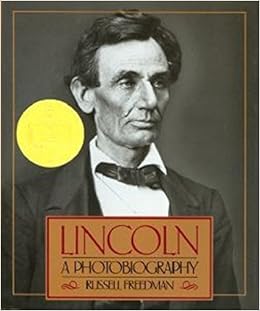
3- Read Lincoln, A  Photo biography. We will be discussing it in class.

4- Define these terms from the Dictionary of Cultural Literacy.  Put them on 3x5 notecards and
bring them to class each week.  We will be using these every week this year. The first 11 were notecards from last year. If you have them, you will not need to rewrite them, just put them in this years stack.
  • Abolitionism
  • John Brown
  • Missouri Compromise
  • Secession
  • Nat Turner
  • Underground Railroad
  • Harriet Tubman
  • Frederick W. Douglass
  • Dred Scott Decision
  • Compromise of 1850
  • Civil War
  • Bull Run, battle of
  • Gettysburg, Battle of
  • Gettysburg Address
  • Sumter, Fort
5. Add 5 things from your reading to your time line.

6. OPTIONAL:  Mack said I needed to have the option to learn from the amazing genius Mr. Betts because Mack says he needs to be part of your education. 

Here are some Mr. Betts videos to help you understand your note card definitions. (If you don't understand something go research it! It will help everything else make sense.)  

Watch these ones to understand:

Compromise of 1850: Mr. Betts Compromise of 1850

Missouri Compromise: Mr. Betts Missouri Compromise

Dred Scott Decision: Mr. Betts Dred Scott

John Brown: Mr. Betts John Brown

Secession: Mr. betts Secession

North vs. South: mr.betts North vs. South

Mack says you're welcome. 


Know/Understand
CHOOSE ONE OF THE FOLLOWING TO DO:

• Choose a Civil War battle (Gettysburg, Antietam, Vicksburg, Bull Run, etc.) and create a 3-D map of the battlefield. Be able to describe to the class the details of the battle, like why did it happen? What generals were involved? Explain the movement of the troops, and how many wounded and dead. Who won? Pretend you are the losing general. Evaluate the battle; what would you have done differently? What would it feel like to know you hold the lives of thousands of men in your hands with every decision you make? If you were Lincoln or Davis, what qualities would you look for in a general?

• With words and pictures, create 2 posters to present to the class—one that depicts the political and economic climate in the Northern states and one that shows that of the Southern states. How do you think the south felt having their way of life threatened with the abolition of slavery? The northern states believed in a strong, united federal government, while the south believed their states had the right to leave the union to prevent their way of life from changing. Who do you believe was right? Why? Do you think that since the Civil War, states’ rights have continued to diminish? Is this a good thing or bad thing?

• Think about Lincoln’s statement below and write an essay that answers the questions that follow.
    “A house divided against itself can not stand. I believe this government cannot endure permanently       half slave and half free. I do not expect the Union to be dissolved—I do not expect the house to   
      fall—but I do expect it will cease to be divided. It will become all one thing or all the other.”
Do you agree with this? Could the nation have carried on with some slave states and some free states? The leaders of the North and South both believed that they were right. They believed it so much, that  they were willing to die for their cause. In our day, there is much confusion and conflicting beliefs on all kinds of issues. How do we keep our differences of opinion from dividing us? Is there a way that you and I can know what is right? How can we know if we are following the course that God would have us follow? Look for some scriptures that answer this question and come prepared to share what you have learned. Email me a copy sarafontano@gmail.com and also your writing mentor.

• Make a timeline of the events leading up to the Civil War, the major battles, and other significant events during the war. Write a few sentences describing the significance of each event. Be creative with this! I would love to see a unique way of displaying this information!

• Write a short story or play set in the Civil War. Make your story as rich in detail as possible and show how the war affects your characters.

• Make a Prezi or do a skit on what life was like for a Civil War soldier. Teach the class what they wore, ate, where they slept, what they did all day? What were battles like? What artillery did they use? What happened if they were wounded or got sick?

• Create a work of art or a slide show depicting the life of a slave. Try to capture the emotions that slaves would have felt in your work. Please bring it to class to share it with us!  

Become/Serve 

(If you are doing more than 1 level of class this week, just choose ONE Become/serve for the whole week.)

CHOOSE ONE OF THE FOLLOWING TO DO:

• Have there been times in your life when you have felt like you are following the course that God would have you go, only to be met by opposition from people who are close to you? Write about your experience. What did you decide to do about it? How could Lincoln’s words and decisions be a guide for you in those situations?

• Write a journal entry exploring the following questions. Do you believe that we are all sent to the earth to accomplish a specific purpose or mission? There are dramatic examples of this in Joseph Smith restoring the church, George Washington winning the Revolutionary War, Abraham Lincoln preserving the Union. But, I believe there are also quiet and less recognized ways that people go about doing God’s work and making a difference in ways that only they can. What are some gifts and talents that the Lord has blessed you with? When you use those gifts, do you feel closer to God? What are some things you can do now to prepare yourself for your life’s mission? Do you already have an idea of what your mission is?

JOURNEYMAN:

TBA


MASTER:

Study/Learn

1- Read a biography on one of the people below, or choose your own.


2- Optional: Watch Gettysburg (1993 version) Rated PG, 4 hrs. 15 min.
    You can rent it for $2.99 on Amazon Prime

Know/Understand

We are having a Living Museum day! Choose a biography to read about a significant person from the Civil War. See the list below. Come to class dressed as your chosen person and prepared with a 2-3 minute dramatization of who you are and explain of your life and accomplishments.

Sign up here.

• Abraham Lincoln                                   • Harriet Beecher Stowe 
• Mary Todd Lincoln​​                                 ​​​​​​​​• Ulysses S. Grant 
• Clara Barton                                          • Joshua Chamberlain
​• Frederick Douglass                               • Robert E. Lee 
​• Stonewall Jackson                                • Harriet Tubman
​• George Pickett                                      • Booker T. Washington 
• William Lloyd Garrison                          • Jefferson Davis 
• Mary Edwards Walker 

Become/Serve

(If you are doing more than 1 level of class this week, just choose ONE Become/serve for the whole week.)


Write a journal entry about the person you read about. What do you admire in them? Are there things about them that you would like to emulate in your own life? If so, what? Choose one thing and make an effort to work on that this week.